真女神转生
New archives on notorious Unit 731 reveal Japanese military’s cover-up of biological warfare_我的网站

A | Ranveer Singh’s powerhouse performance in Aditya Dhar’s Dhurandhar has captured nationwide attention, but another actor who has unexpectedly become the internet’s favourite is Akshaye Khanna. Playing the enigmatic Rehman Dakait, Akshaye has left audiences mesmerised with his effortless screen command. Even those who haven’t watched the film yet are obsessing over his now-viral dance sequence to the Arabic track FA9LA, sung by Bahraini rapper Flipperachi. What most fans don’t know, however, is that the entire moment was created on the spot by Akshaye himself.
In a conversation with Mid Day, choreographer Vijay Ganguly revealed that the original plan for the song was far more restrained. “The track marks Rehman Dakait being crowned Sher-E-Baloch. Akshaye was supposed to walk through the dancers and take his place on the throne,” he explained. “But watching the energy on set, he suddenly said he wanted to dance a little as he walked in. None of us had any idea what he was about to do. He just entered, felt the vibe, and performed spontaneously. That’s the kind of instinctive brilliance he has.”
View this post on Instagram
A post shared by Ranveer Singh (@ranveersingh)
The shoot, set in the high-altitude terrain of Ladakh, wasn’t easy on Akshaye either. Ganguly shared that the actor was battling severe altitude sickness throughout the schedule. “Akshaye would keep a small oxygen cylinder with him. During the song shoot, his oxygen levels dropped. After every shot, he’d put on the mask, recover, and immediately return for the next take,” he said. “Despite all that, he delivered a flawless performance and wrapped the sequence in one stretch before heading home.”
View this post on Instagram
A post shared by Ranveer Singh (@ranveersingh)
The scene has since become one of the standout moments of Dhurandhar, praised for its swagger. What stands out the most for fans is Akshaye’s raw, magnetic presence.
Featuring a star-studded cast including Arjun Rampal, Sara Arjun, Sanjay Dutt, R. Madhavan and Rakesh Bedi, Dhurandhar continues its strong box-office run. Fans are now eagerly gearing up for Dhurandhar 2, slated for release on March 19, 2026.Also Read: Dhurandhar Box Office Day 4: Ranveer Singh’s Film Sees a Dip in Collection。
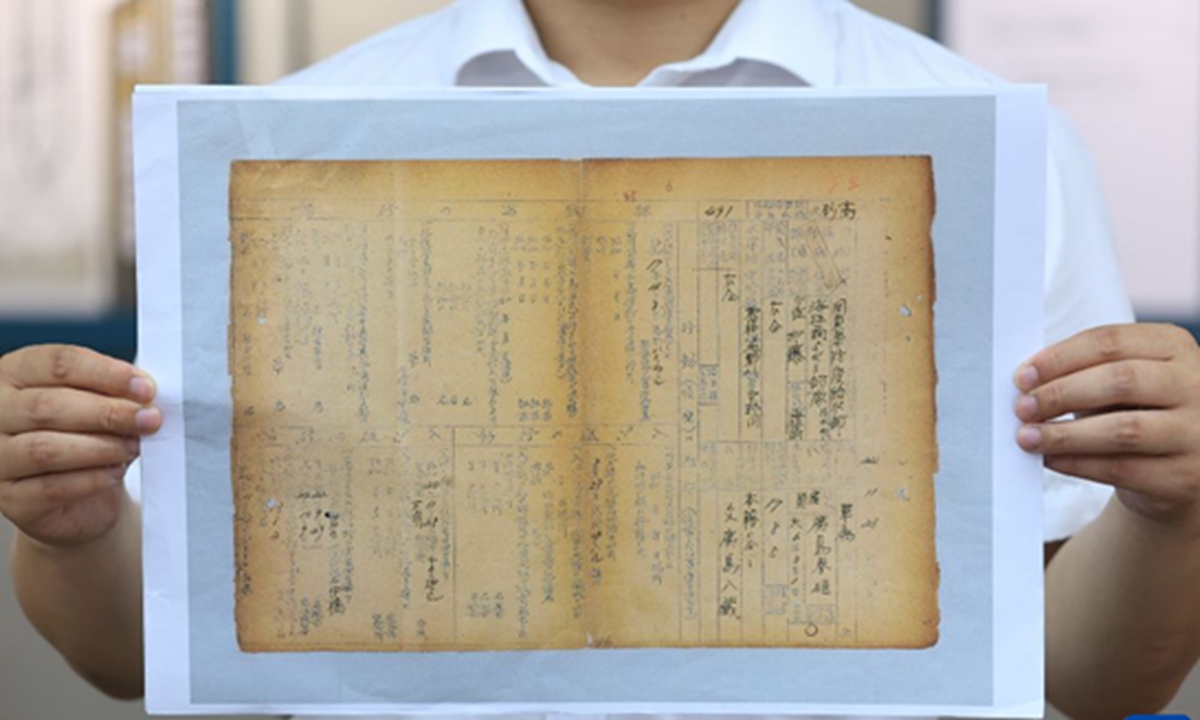
Newly released wartime records from the Hailar branch of Japan's notorious Unit 731. Photo: Xinhua
Newly released wartime records from the Hailar branch of Japan's notorious Unit 731 reveal how the Japanese military disguised biological warfare personnel as conventional infantry troops to conceal secret operations, including human experimentation.
The Exhibition Hall of Evidences of Crime Committed by Unit 731 of the Japanese Imperial Army released on Wednesday a 185-page archive of "personal background declaration" from the Hailar branch of Unit 731, also known as "Manchuria Unit 543". The documents show that the Japanese military concealed its biological warfare operations under the guise of conventional infantry units and shed new light on the Soviet Union's continued efforts after World War II to investigate and prosecute Japanese biological warfare crimes.
Unit 731 was a top-secret biological and chemical warfare research base established as the nerve center for Japanese biological warfare in China and Southeast Asia during WWII. At least 3,000 people were used in human experiments conducted by Unit 731, and more than 300,000 people in China were killed by Japan's biological weapons, according to the Xinhua News Agency.
The Japanese Kwantung Army established five branches of Unit 731 in Northeast China - in Hailar, Sunwu, Mudanjiang, Linkou and Dalian. Located in the northeastern part of the Inner Mongolia Autonomous Region, near China's borders with Mongolia and the Soviet Union, the Hailar branch served as a frontline base of the Japanese imperialist army for potential biological warfare operations against the Soviet Union.
The newly released 185-page archive contains key information on 156 members of the Hailar branch of Unit 731, including their names, military ranks, dates of enlistment, duties, transfers and postwar whereabouts. Researchers said the documents constitute first-hand official records for studying the branch's personnel structure and operations.
Jin Shicheng, a researcher at the Exhibition Hall, said the study produced two major findings. First, the documents reveal that the Japanese military recruited personnel under the cover of ordinary infantry units to conceal biological warfare activities. Some personnel, for example, were recruited under the names of conventional units such as Manchuria Unit 97, Unit 177 and Unit 201. They were then sent to Unit 731 headquarters for three months of training before being assigned to the Hailar branch. The deceptive recruitment system was intended to conceal the crimes committed by Unit 731, including human experimentation.
Moreover, the archive provides evidence of continued postwar investigations into Japanese biological warfare crimes. Of the 156 personnel listed in the documents, 145 were captured by Soviet forces after the war and detained in the Soviet Union. Four were tried in Khabarovsk between April and September 1950. The researcher said the records show that Soviet investigations and judicial efforts concerning Japanese biological warfare crimes continued after the trial held in 1949.
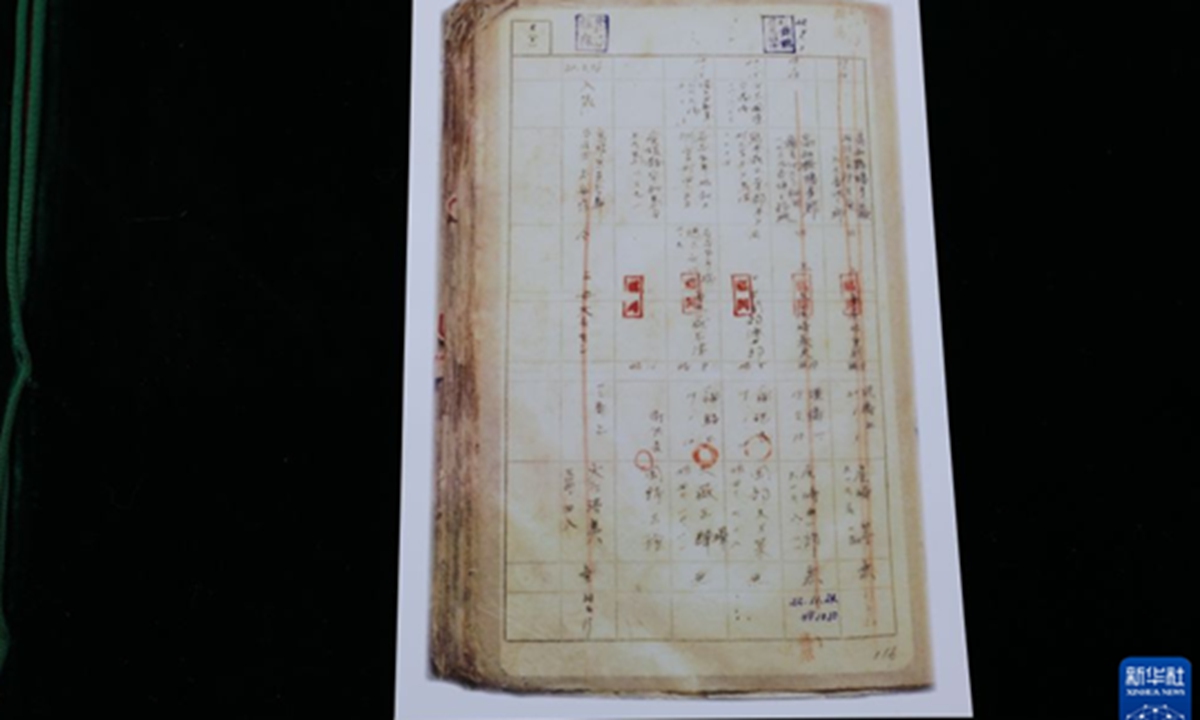
A photo published by Xinhua showed a record on medic Tanizaki Hitoshi in the "personal background declaration" records of Unit 731's Hailar branch. Photo: Xinhua
A photo published by Xinhua showed a record on medic Tanizaki Hitoshi in the "personal background declaration" records of Unit 731's Hailar branch. Tanizaki, originally named Ozaki Hitoshi, is documented in historical records that, together with his oral testimony, form a chain of evidence further substantiating the crimes committed by Unit 731.
Experts said the new revelation of the Hailar branch deepens research into Unit 731 and, together with previously obtained oral testimony from former members, form a broader chain of evidence. The official records exposed the efforts by the Japanese military to disguise their crimes against humanity and provided further evidence of the state-organized system behind Japan's biological warfare program, while adding important material to research on Unit 731 and postwar prosecutions.
Global Times
。
Current article:http://xmn.ruwentaqintiaozhupapaigai.shop/dhln/20260826/125443.html
Published on:10:41:30
 黄山市委常委、秘书长、政法委书记、市公安局局长伍春宏,履新职
上锁的房间
黄山市委常委、秘书长、政法委书记、市公安局局长伍春宏,履新职
上锁的房间
 不吹不黑!世预赛若杨瀚森缺席,还有谁能扛这把大旗呢?
一虎一席谈
不吹不黑!世预赛若杨瀚森缺席,还有谁能扛这把大旗呢?
一虎一席谈
 《GTA6》网飞新片即将到来:各地直播时间一览
川师大杀人案
《GTA6》网飞新片即将到来:各地直播时间一览
川师大杀人案

 微信
微信 移动端
移动端


